
Our Story

A History of Powering Progress and Partnership
Throughout our history, Redlich Horwitz Foundation has proudly supported program development, system reform, and advocacy that transforms the lives of children and families.
For nearly a decade, the Foundation funded initiatives to improve permanency and education outcomes for children in foster care in New York. These local and state efforts led to:
- Substantial public funding to expand educational supports for foster youth.
- System partnerships and technical assistance that cut institutional placements in half.
- Doubling the percentage of children in foster care living with kin.
Today, RHF invests in advocacy and community groups across New York to support reimagining initiatives that provide essential resources to families in need and prevent unnecessary system involvement.
Grantmaking Totals
Since 2013
 460 grants
 169 organizations
 $38.7 M investment
Pivotal Victories
Advocacy Wins
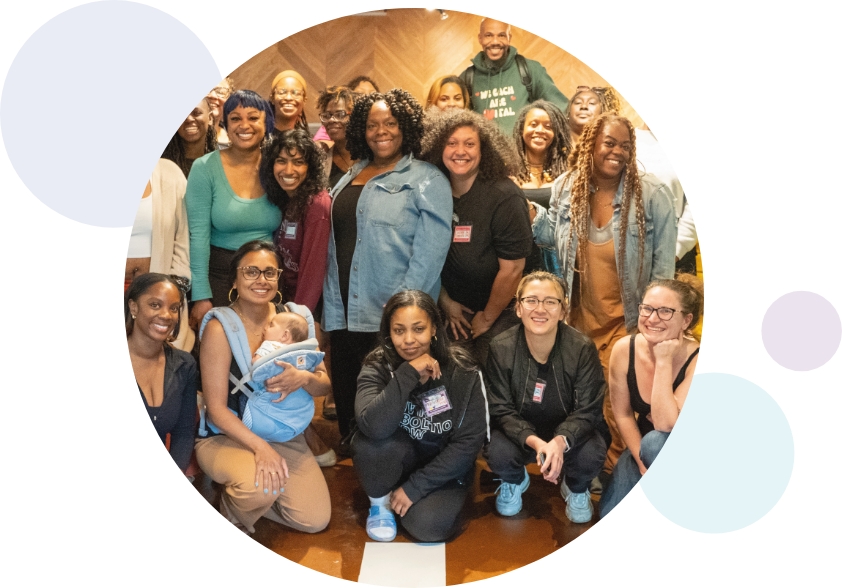
Since 2015, campaigns spearheaded by RHF’s grantee partners have achieved pivotal policy, practice, and budgetary victories on behalf of system-impacted New York children and families.

Over the past decade, nearly $200 million in public funding has improved the educational attainment of thousands of secondary and post-secondary students in foster care across the state by providing financial aid, tutoring, coaching, and career development support.
RHF helped launch the Fostering Youth Success Alliance (FYSA) by awarding grants and serving on the steering committee. FYSA has secured over $67.2 million in state appropriations for the Foster Youth College Success Initiative since its inception in 2015.
The Foundation also contributed to the success of Fair Futures NYC by underwriting a youth advisory board, establishing an interagency foster care task force, and serving on the advocacy committee and as a board trustee. Now a codified, comprehensive, youth-centered model, Fair Futures has garnered nearly $132.7 million in public funding since 2020. The program is the first in the nation to secure fully baselined support for young people in foster care through age 26.

CHAMPS-NY was instrumental in making New York a “kin-first” state by:
Passing legislation establishing a $3 million Family First Transition Fund to support counties in prioritizing kinship care over congregate care.
Securing KinGAP permanency funding as a separate state allocation from the Child Welfare Block Grant.
Advocating for OCFS to institute the Kin-First Firewall, a new state policy ensuring kinship placements are the top priority for children entering the foster system.

Advocacy efforts led by the New York State Child Welfare Coalition achieved major child welfare housing reforms, including more flexible eligibility requirements and doubling the monthly subsidy from $300 to $600.
Reducing Congregate Care in NYS
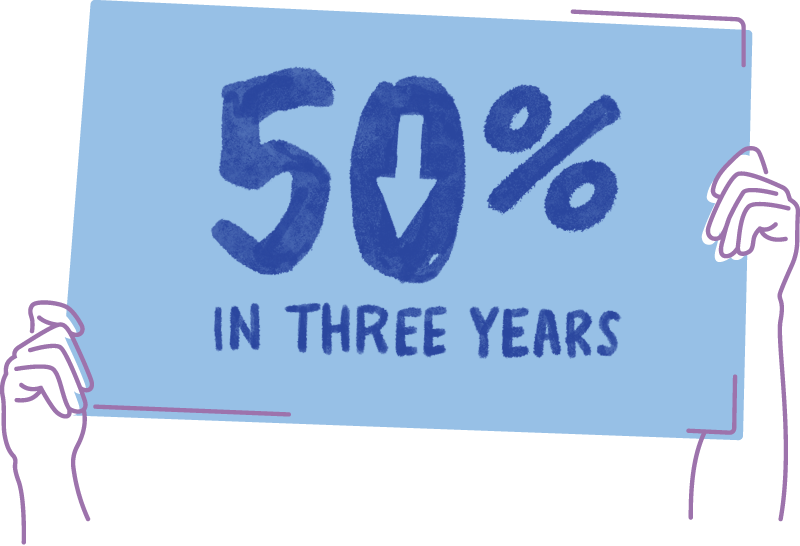
RHF’s multi-year commitment to strengthening system partnerships resulted in a 50% reduction in the use of restrictive institutional settings for young people in foster care from 2018 (24%) to 2021 (12%).
Milestones
Redlich Horwitz Foundation Established
Founded by Cathy Redlich and Rob Horwitz in 1986, RHF initially made grants to organizations and policy reform initiatives addressing education, criminal justice, drug policy, and global health issues. The Foundation’s support was integral in legalizing needle exchange programs to curtail the spread of AIDS and in implementing sentencing reform.

Focus on Foster Care
In 2012, RHF introduced a streamlined strategy concentrating on systemic issues affecting New York children. The Foundation hired its first executive director, Sarah Chiles, who led an extensive strategic planning process to determine the best direction forward to address the challenges facing young people in foster care. As a result, our grantmaking shifted focus to achieving permanency for system-involved children, improving their educational attainment, and increasing stabilizing support services after they age out of the system as young adults.
Working Together for Greater Impact
Strategic collaborations are a hallmark of RHF’s work. Our commitment to partnerships with mission-aligned philanthropic organizations has deepened investments and expanded programs and services that make a meaningful difference in the lives of children and families.

Scaling What Works
In 2015, RHF provided six New York counties with multi-year grants and technical assistance to enhance initiatives promoting family-based foster care and reducing the use of institutional facilities. This essential support helped pilot models and later roll out best practices statewide. The Foundation also funded efforts to recruit and retain kinship families and the replication of effective educational coaching models and financial aid programs for transition-age youth.
Family First Readiness
The Family First Prevention Services Act of 2018 restricted the use of federal funds for institutional congregate care settings and encouraged evidence-based preventive services to keep families safely together. RHF teamed with the New York Office of Children and Family Services (OCFS) to help counties navigate and comply with new programmatic and fiscal reforms. This four-year public-private partnership created a state-funded Family First Transition Fund, RHF-backed technical assistance to 18 counties, and resources to help districts prepare for implementation.
Honoring Equity and Lived Experiences
In 2020, the Foundation affirmed the importance of community expertise and inclusion by adopting a new equity lens acknowledging the profound disadvantages caused by systemic racism. RHF’s grantmaking now prioritizes the perspectives of people with lived experience in determining which funding and partnership strategies are essential for supporting family success.
Narrowing the Front Door to System Involvement
The Foundation provided seed funding to launch a cross-sector, citywide coalition in 2021 to analyze child welfare practices in New York City and develop an advocacy agenda for change.
Over the next year, RHF staff joined 400 diverse stakeholders for conversations about complex issues and child welfare policies that disproportionately affect Black and low-income families. The coalition’s report, released the following year, marked a turning point for the movement to limit the scope and scale of government interventions and called for greater investment in alternative community-based responses that improve child well-being while maintaining family integrity and autonomy.

Four Priorities, One Vision
After an intensive, statewide listening tour, the Foundation refined its mission and grantmaking strategies in 2023, under the direction of new executive director, Jessica Maxwell. As a result, RHF prioritizes investments that expedite and maximize impact in building the family justice movement. We also reinforced internal operations through staff and board expansion, adding more capacity to identify new opportunities for addressing racial disparities, preventing childhood trauma, and supporting family resiliency.
Mobilizing Action
In 2024, the Foundation issued the first-ever open call for proposals from grassroots organizations across the state. Grants awarded to the Building for Community Action cohort support community organizing, advocacy, and direct services that help New York’s children and families heal, remain intact, and thrive. RHF also convened the first New York State Lived Experience Expert (LEX) Retreat to empower system-impacted young people and adults to frame their challenges, make decisions, and design local and statewide solutions that keep children safe at home where they belong — with their families.
Meeting the Moment
RHF’s key accomplishments reflect fruitful collaborations with extraordinary grantees, partners, and advocates. Together, we worked to make systems more effective and efficient, remove barriers to success for youth, and create new opportunities for generations of young people through advocacy, practice change, and more equitable resource allocation.
Our early work in foster care wrongly assumed that removing a child from their family was necessary to achieve safety. The current system operates under the false premise that severe cases of child abuse are common rather than rare. However, case data tells a different story.
Over the years, our perspective has evolved to reshape a more effective and empathetic grantmaking approach aimed at breaking cycles of family disruption, structural racism, and intergenerational trauma that forever change and often separate children from their families.